Choosing the right tree for your property
Do you want to grow a beautiful tree at your place, but aren’t sure what would be a good choice? Here are some questions to get you planting.
Think about your site
1. What is there?
- How much water does it get?
- Is it currently lawn or paving?
- Is it especially hot?
2. Where do you not want your tree?
- Where are your services? Think about your water pipes, NBN, etc – anything you might have to dig up in the future if there is an issue.
- Do you have leach drains?
- Do you have solar panels you don’t want to shade?
- Do you have overhead powerlines that you need to be mindful of?
- Do you live in a bushfire prone area in a lot over 4000m2? You can still have trees, but you need to check the guidelines for planting within your asset protection zone. Have a look at our page on fire and emergency management for more information.
3. Think about which area you live in
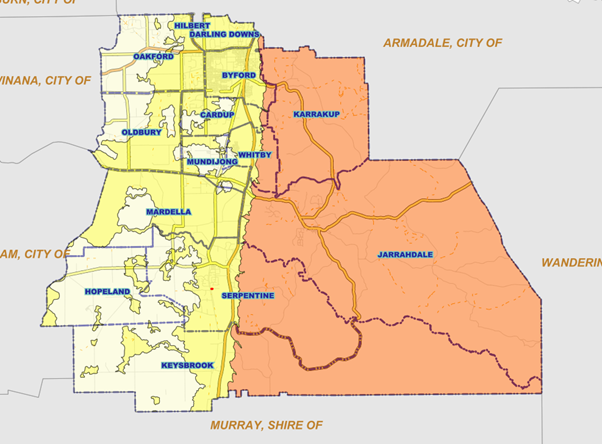
- Is your soil sandy? Gravelly? Has it got clay underneath and gets boggy in winter? Some housing developments in clay flats will have sand fill to prevent flooding. If that’s the case at your property, you could think of it as being in a sandy* zone.
See the map below: Bassendean Zone (pale yellow) is sandy, Pinjarra Zone (yellow) is sand over clay, and Western Darling Range Zone (orange) is gravelly and rocky.
*You will need to add plenty of organic matter if you have a lot of yellow sand in your proposed tree bed. If you’re planting natives, make sure to add a native soil mix. For other trees, you want to choose the right compost – there are many options so check the labels or ask at the nursery. For fruits and vegetables, you may want to add manure as well - Gardening Australia has a great guide.
4. What are your goals?
- Do you want a wide shade tree, or are you working with a small or narrow space?
- Do you want to provide ecological support for native species, or is it more important to you to have an impressive floral display?
- Do you have someone with mobility issues in your household? You might want to look for a tree which doesn’t drop nuts or sticks.
Plant finding tips
- Some of our beautiful native trees are available in dwarf cultivars from nurseries and garden centres.
- BGPA Kings Park has grown seedlings of some beautiful natives which are from further north and inland, in WA's arid zone. These plants might handle hot and dry conditions better, e.g. Eucalyptus kingsmillii and Hakea invaginata. You may be able to find them at garden centres, especially those that specialise in native plants.
Here are some links to some great planting ideas:
Keeping It Local Booklet
For inspiration on species for SJ based on your soil type.
Urban and Rural Tree Selection Matrix
Includes some exotic and native species as well as a table to guide your choice with data on height etc.
Help our endangered Black Cockatoos
Birdlife ‘How to plant for black cockatoos’
Murdoch Uni ‘How you can help by planting food’
Encourage small birds and backyard biodiversity
Birdlife ‘Bird friendly gardens’
Planting for biodiversity? Learn about the Miyawaki Model
5. Buy or order the tree
You may be eligible for a rebate if you buy a native tree, so keep the receipt! Don’t forget to buy some stakes or tree guards to protect your tree while it’s small.
Make sure to check the Treebate terms and conditions before making your purchase, to avoid disappointment.
The Treebate is only available to until 2029 and not all purchases will be eligible. See Step 8.
6. Prepare the site
Remove any weeds, grass and rocks. Dig a hole twice as wide and twice as deep as the pot of the tree. Dig in any soil amendments such as native soil mix or sheep manure if you think you need it. For example, if your house is built on a metre of sand fill, you might want to add some nutrients and water-holding organic matter.
7. Plant your tree!
After the first heavy rains of autumn or early winter, you can plant your tree! Mulch with chunky organic mulch, such as woodchips, over the top to 10 cm deep. Don’t let the mulch touch the trunk – you need about 10cm of space. This creates a quick-draining well for water and prevents wet mulch from rotting the trunk away.
- Native trees: during the first few years, give it a bucket of extra water once a week over summer. The tree should be grown enough after around three years for its its roots to reach underground moisture.
- Not native: it may need regular water, especially if the species isn’t from somewhere as hot and dry as WA! Consider using drip irrigation as a more water efficient option. Visit the Watercorp website for more details on how to make a waterwise garden, rebates for waterwise sprinklers are available.
8. Apply for the Treebate, if applicable.
A rebate of $150 is available from the WA Government, but conditions apply. In summary, your tree must be native and must have an adult height of 3 metres or taller, and one applicant gets the rebate for one tree. You also need to apply before July. Read more about the Treebate program here.
The Treebate program is not a Shire of Serpentine Jarrahdale initiative – for any enquiries, visit the WA Government’s Treebate page and follow the instructions there.
9. Pat yourself on the back for a job well done and enjoy your new tree!