About the program
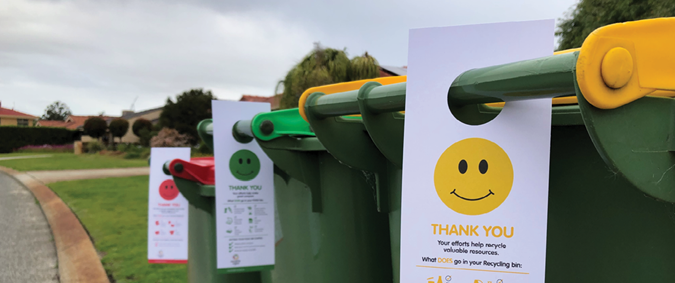
Bin tagging is a way of giving residents clear, practical feedback about what’s in their waste and recycling bins. A tag is placed on each bin to show whether the contents are being sorted correctly.
Bin auditors carry out a quick visual check of what's in the bin at the kerbside before collection, simply by opening the lid and seeing what’s inside. Based on this check, information is recorded for each household. The tag left on the bin explains what was done well, what may need improving, and offers general tips on what can and can’t go in the bins (see below image for examples of the tags).
In addition to bin tagging, our team will also be door knocking during the program. We genuinely want to hear from you directly - whether that’s questions you have, challenges you’re facing, or feedback about waste and recycling in your household. Your insights will help us understand what’s working and where more support is needed.
This program will run between 23 Feb - 14 April 2026 in select areas of Byford. Byford was chosen as the focus area for this program because it is highly walkable in comparison to other, more rural suburbs such as Serpentine and Jarrahdale.
Why are we running this program?
The Shire understands that residents are doing their best to sort their waste correctly. We also know it can sometimes be confusing to know what items should go in which bin. That's why our bin tagging program is here - to help, not punish. The goal is to provide clear, practical guidance so sorting your waste is easier and less confusing. By leaving helpful feedback on your bin, we can support you in getting it right, improve recycling in our community, and make sure everyone’s efforts count.
What residents need to know
If your household is part of the bin tagging program, you will receive a notification in the mail before the program starts. There’s nothing extra you need to do to participate, just continue putting your bins out for collection on your usual day. Please note that your waste may be collected slightly later than usual, but still on the same day.
However, we encourage residents to get involved and make the most of the program by:
- Talking with our team: During door-knocking visits, our staff may ask a few questions about your waste and recycling, such as any items you find confusing to dispose of or barriers you face with kerbside bins. If you have similar questions but are not at home while the team is conducting the visits, please feel free to contact the Shire’s Waste Education Officer – Hayley.Calway@sjshire.wa.gov.au.
- Sharing feedback: After the program has finished, we’ll invite residents to share their thoughts through an easy feedback process, such as a short online survey, email, or phone call. Your input helps us understand what worked well, what could be improved, and how we can make future waste and recycling programs even more effective.
- Understanding collection timing: While your bin collection day will not change, some collections may be slightly later than usual while the program is underway. This is to allow the team time to conduct the audits before the bins are emptied.
Contact Information
If you have any further questions about this program, want to offer feedback, or want to ask specific questions about sorting your waste, please contact either:
We thank you for your support of this program and for helping us make it a success within the community.
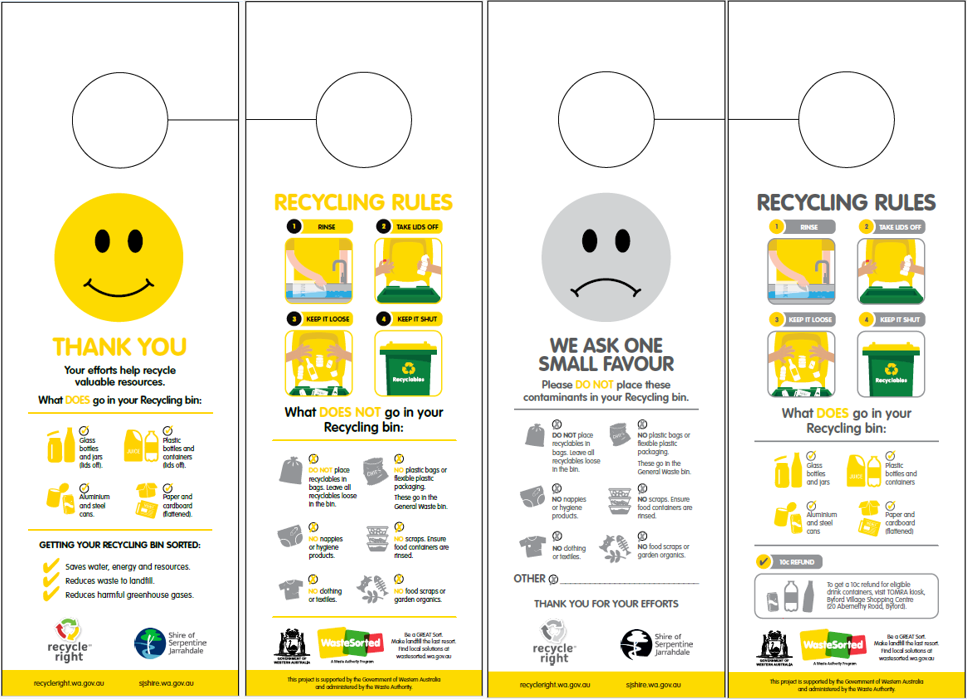
Example of Bin Tag - Recycling (above).
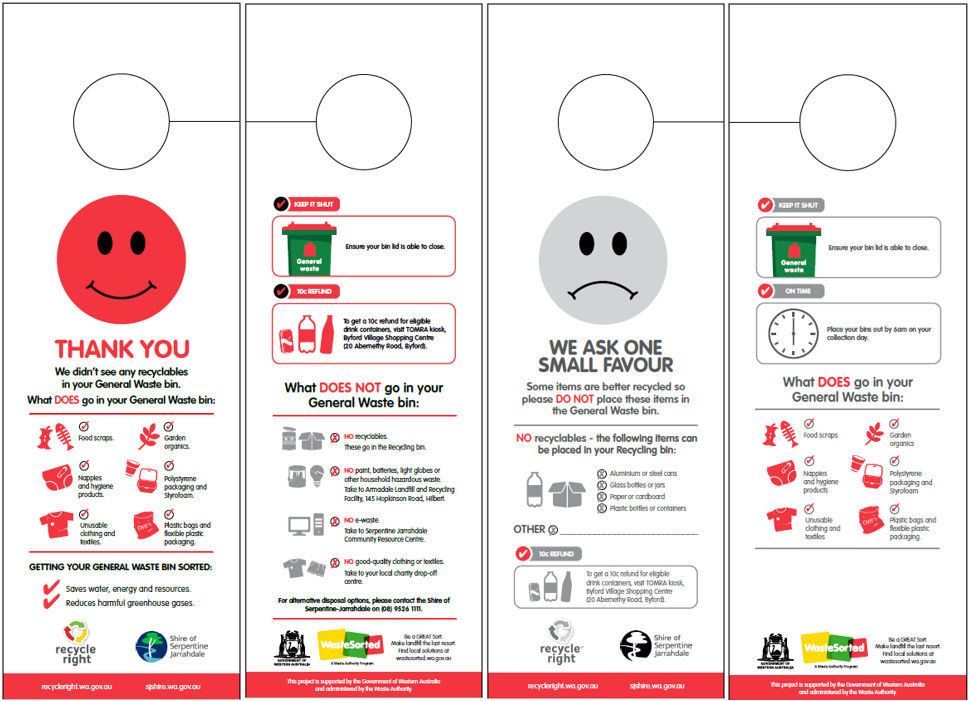
Example of Bin Tag - General Waste (above).
Frequently Asked Questions
What is "Bin Tag and Talk"?
It’s an education program where waste educators look at the visible contents of your kerbside bins on bin day and put a tag on your bin handle to share feedback. It’s meant to help residents recycle correctly and reduce waste contamination.
Do I have to pay a fine if my bin gets tagged?
No, There are no fines or penalties issued as part of this program. This is not enforcement, it’s education and helping you understand what goes in each bin.
Do I have to pay a fine if my bin gets tagged?
No, There are no fines or penalties issued as part of this program. This is not enforcement, it’s education and helping you understand what goes in each bin.
Why are staff looking at my bin?
Contamination levels have been found to be high in the Shire. This is often because recycling can be confusing. Through this program, waste educators do a quick visual check of what’s on the top layer of the bin while it’s on the verge before collection. They are not emptying, digging through, or removing your bin contents. They’re simply providing helpful feedback.
What does the tag on my bin mean?
Happy Tag: Your bin looks good. Little to no contamination.
Educational Tag: Shows items found that shouldn’t be in that bin, with tips on how to sort better next time.
These tags are meant to help you sort waste correctly.
Example of Bin Tag - Recycling (above).
Example of Bin Tag - General Waste (above).
Is this a “bin audit” or enforcement?
No, this is not an audit with penalties. It’s a community education activity that helps people learn what should go in the general waste or recycling bin so we all recycle more and waste less.
Do we record household details?
The tag is about 'what’s in the bin that day' and general recycling guidance. The focus is on community waste trends and correct sorting. No individual fines or compliance records are issued.
Will this affect my rates or services?
No. This initiative is a WALGA funded small, education-focused pilot involving a limited number of households selected at random and does not involve fines, penalties, or enforcement.
It won’t change your service level, your bin collection schedule, or your waste charges. This is purely an educational tool to make waste sorting easier for everyone.
What if I disagree with what’s on the tag?
You’re welcome to contact the Shire’s Customer Service team on (08) 9526 1111 if you’re unsure about why certain items were flagged. They can help explain the sorting guidelines.
Who runs the Bin Tag and Talk program?
Waste educators (in high-visibility gear with ID) run it on behalf of the Shire as part of waste education. Their role is to provide helpful sorting tips, not enforce rules.
Is my bin being "watched" every week?
No, tagging usually happens in targeted rounds during the Bin Tagging Program.