Streetscapes in SJ
From rural roads to busy town centres, our streets reflect the different landscapes and communities of Serpentine Jarrahdale.
Explore the four main streetscape types, learn why infrastructure differs between areas and find out how to report a maintenance issue.
Report a maintenance issue
Let us know about issues affecting streets, verges, trees, drains or footpaths, including vegetation obstructing access or visibility.
Request a service or report an issue
What is a streetscape?
A streetscape is the combination of features that give a street its appearance and character. These include the road, buildings, fences, driveways, footpaths, trees, gardens, drainage, lighting and seating.
The balance of these features changes between town centres, urban neighbourhoods and rural areas.
Our four streetscape types
The examples below show how streetscapes reflect the surrounding land uses and local landscape.
Town centre
Town centres bring together shops, services, employment and community activities. Their streets support people moving between businesses, public spaces and local facilities.
Typical features include:
- Footpaths, pedestrian crossings and seating.
- Street trees and landscaped areas.
- On-street parking.
- A mix of commercial and community uses.
 Town centre streetscape.
Urban
Urban streets are generally found within townsites, where homes occupy smaller lots. They may also include local services such as medical centres and childcare facilities.
Typical features include:
- Footpaths, kerbing and driveway crossovers.
- Private gardens and planned street tree planting.
- Piped drainage and stormwater management areas.
- Mainly residential land uses.
 Urban streetscape.
Rural residential
Rural residential areas combine homes on larger lifestyle lots with elements of the surrounding rural landscape. They often form a transition between townsites and farming areas.
Typical features include:
- Open roadside drains or swales.
- Grassed verges and areas of connected vegetation.
- Rural-style fencing.
- Gardens, paddocks and small rural pursuits.
 Rural residential streetscape.
Rural
Rural streets pass through larger farming properties and natural landscapes. Open land and vegetation are prominent, with fewer built features.
Typical features include:
- Open roadside drains or swales.
- Grassed verges and native vegetation.
- Simple rural fencing.
- Adjoining farmland or bushland.
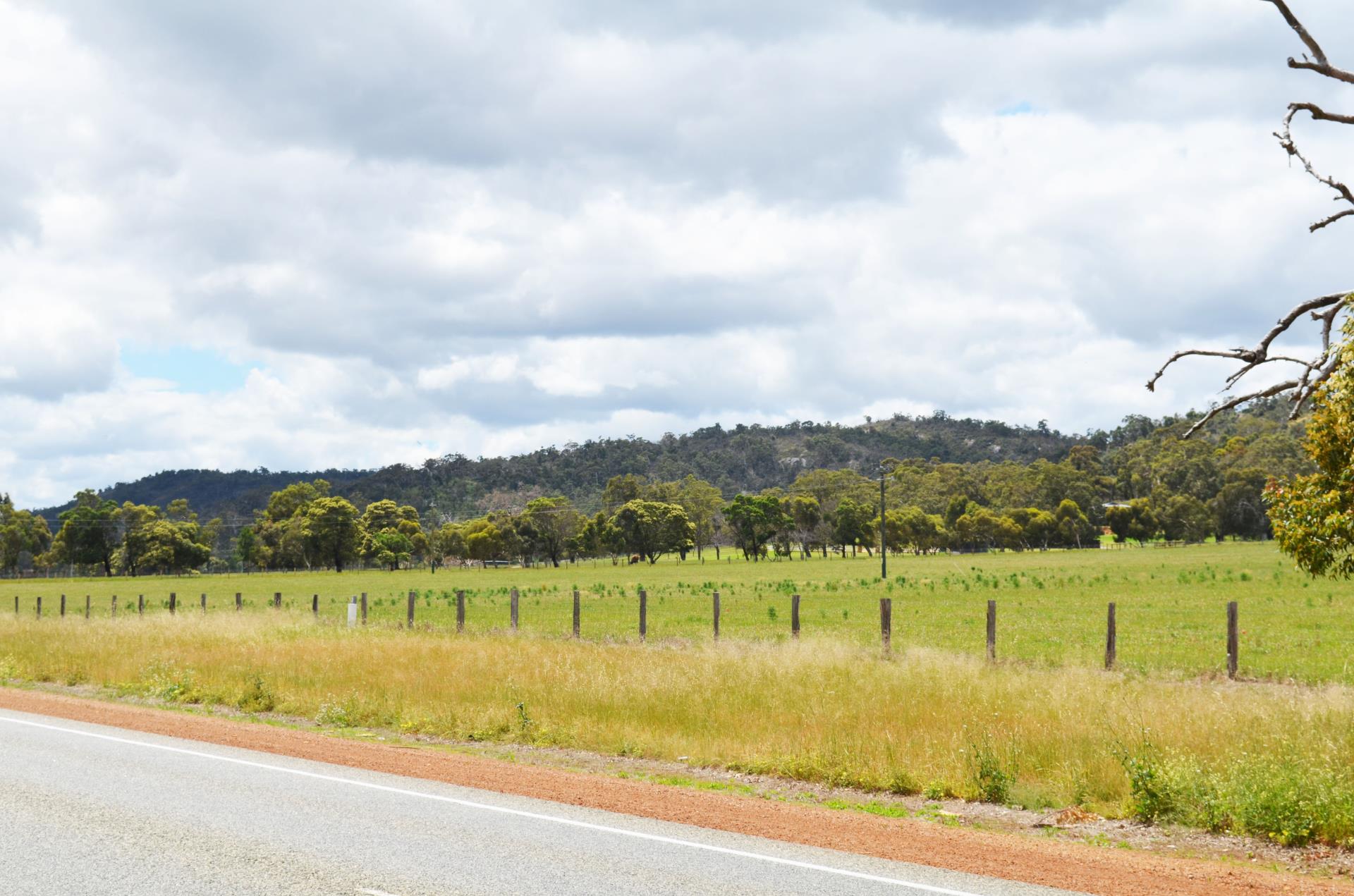 Rural streetscape.
Why do streets look different across the Shire?
Streets are designed to suit their location, surrounding land uses and the people who use them.
Town centres and urban areas generally have more infrastructure, such as footpaths, lighting, seating and formal parking, to support higher levels of activity.
Rural and rural residential streets generally have fewer built features, helping retain their open landscape and rural character. Infrastructure and maintenance needs therefore vary between locations.
These differences help preserve the distinct character of our towns, neighbourhoods and farming areas.
Who looks after streets and verges?
Verge maintenance is a shared responsibility. Residents help care for the verge adjoining their property, while the Shire manages street trees and works associated with road safety, drainage and public access.
Our maintenance work includes addressing vegetation that obstructs visibility at intersections or affects drains and footpath access.
For details about responsibilities and permitted verge treatments, read our verge policies and guidelines.
Why are street trees important?
Street trees contribute to the character of our towns and rural areas. They also:
- Provide shade and help reduce heat.
- Make walking and cycling more comfortable.
- Provide habitat for wildlife.
- Support air quality and greener neighbourhoods.
Find out more about trees in the Shire.
Drainage and water-sensitive landscaping
Rain gardens, drainage swales, basins and seasonal wetlands help manage stormwater. They collect, slow or filter runoff and form part of the area’s drainage system.
These spaces may look different from a conventional garden or park. Plants such as reeds and rushes have a practical role in managing water and supporting the surrounding environment.
Water-sensitive design helps us manage rainfall where it falls while creating greener streets and public spaces.